.webp)

You're comparing gutter warranties, and the documents from the big national guard brands can read like legal contracts written by people who have never cleaned a gutter. With 20+ years of combined team experience on Jacksonville homes, we know what these warranties tend to cover when gutters fail during a Florida thunderstorm, and more importantly, what they don't.
Here's what a lot of salespeople won't spell out: a "lifetime warranty" rarely means what homeowners assume. Storm-season claims get denied for reasons people never saw coming, usually because of an exclusion or maintenance condition buried in the fine print. The difference between a covered repair and paying out of pocket is reading that fine print before you sign.
What should a gutter warranty cover, and what does ours cover?
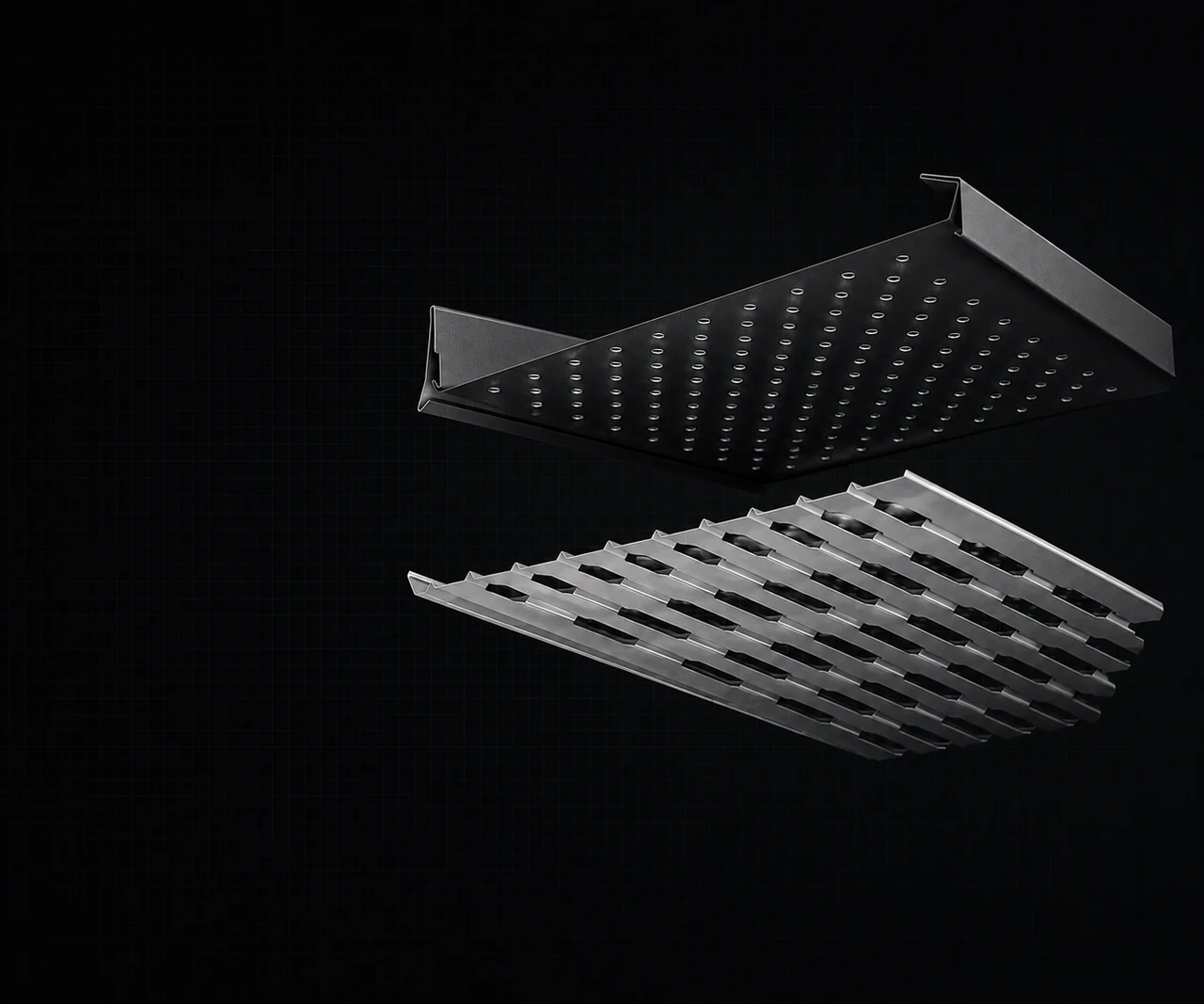
A good gutter warranty spells out in writing what it covers, for how long, whether it transfers when you sell, how installation errors are handled and what it excludes. Expect hurricanes and other severe weather to be excluded. Our dual-layer micro-mesh gutter guards carry a lifetime limited product warranty that can be transferred once with the property. It includes clog-free performance, including pine-covered areas. It excludes the gutter itself, faulty installation, and hurricanes and other specified severe weather, and new installations must be registered to activate it. Full terms are on our warranty page.
What Gutter Warranties Actually Cover
Most gutter and gutter guard warranties have two separate parts, and you need to know which one you're looking at.
Material or product warranties cover manufacturing defects: seams that split without any impact, a factory finish that peels or flakes early, or material that fails in a way it shouldn't under normal use. If a seamless gutter cracks with no tree damage or obvious impact, that's usually the kind of failure a product warranty is written for. Length varies a lot by material and manufacturer, so read the actual term rather than trusting the brochure headline. These terms apply to the material itself, not to how it was installed or how well it performs.
Workmanship warranties cover the installation, and they are often much shorter than the product coverage. This is where problems like improper pitch (a common guideline is about a quarter-inch of drop per 10 feet so water moves to the downspouts in our heavy summer downpours), loose hangers or poorly sealed end caps and corners get handled. Always ask for the workmanship term in writing, separately from the product term.
At Clean Gutter Protection, our gutter guards carry a lifetime limited product warranty. You can read exactly what it includes and excludes on our warranty page, and see how the system itself works on our gutter guards page. Our gutter guards install without lifting shingles, which matters because disturbing the roof can create its own warranty questions with your roofer.
The Hurricane Damage Reality Check
Every hurricane season brings a wave of warranty questions. Here's what surprises homeowners: most gutter warranties treat hurricane and severe storm damage as an excluded event. Storm damage is generally a homeowner's insurance matter, not a gutter warranty matter. That includes the guard warranty at Clean Gutter Protection, which excludes hurricanes and other severe-weather events. Your best storm defense is a solid installation plus the right insurance.
The practical takeaway: if wind tears a run of gutter off the fascia, expect the gutter company to point you to your insurer. Our gutter damage insurance claim guide walks through that side of the process.
National Brand vs. Local Installer Warranties
Warranty terms change, differ by product line and are sometimes adjusted by individual dealers, so we won't quote another company's fine print here. Instead, here are the patterns to look for when you put two warranties side by side.
National Guard Brands
Large national guard companies often lead with a "lifetime" or "no-clog" promise. The questions that matter are underneath it:
- Who is covered: many lifetime terms apply only to the original owner, and transfer to a buyer may be limited, require paperwork or carry a fee.
- What "no-clog" means: some guarantees promise to clean the gutters if they clog, rather than promising they never will. That's a service promise, not a performance promise.
- Maintenance conditions: some terms require you to keep the system maintained or inspected, and a missed requirement can give the company grounds to deny a claim.
- Debris exclusions: look for language about "excessive" or "unusual" debris. In Jacksonville, where pine needles fall year-round and live oaks drop heavily in late winter and spring, that wording matters.
Local Installers
Local installers deal with Jacksonville conditions every day: afternoon thunderstorms that test gutter capacity all summer, the spring oak drop, pine needles, and salt air near the beaches. The advantage of a local company is that you can ask direct questions, get a fast response when something goes wrong, and have the same people who installed the system come back to look at it.
The risk with any installer is whether they'll still be around in 15 years. That's why it pays to separate the product warranty (backed by the material or guard maker) from the workmanship warranty (backed by the installer). Our guide on how to choose a gutter contractor in Jacksonville covers what to check.
Warranty Comparison Table: What to Check
Use this table to compare any two quotes. Fill in the right-hand columns from each company's written warranty, not from the sales pitch.
| Warranty Term | What to Look For | Common Red Flag |
|---|---|---|
| Coverage length | Separate product and workmanship terms, both in writing | "Lifetime" with no definition of whose lifetime |
| Transferability | Clear transfer steps for a future buyer | Transfer fees or reduced coverage for new owners |
| Storm and hurricane damage | Honest statement that severe weather is an insurance matter | Sales talk implying storms are covered when the document excludes them |
| Maintenance conditions | Specific, reasonable requirements you can actually meet | Vague "proper maintenance" language with no definition |
| Debris and environment | How pine needles, oak debris and coastal salt air are treated | "Excessive debris" or "environmental damage" exclusions |
| Claims process | A named phone number and a clear way to report a problem | Claims routed through a dealer that may not exist later |
What Voids Your Gutter Warranty (And Nobody Tells You)
The most common way to lose coverage is failing a maintenance condition. But "improper maintenance" means different things in different documents. Some warranties exclude damage from pressure washers, ladders resting on the gutters, or cleaning tools that scratch the guard surface. Even hanging holiday lights with clips that bend the gutter lip can cause damage that isn't covered.
Installation Modifications That Kill Coverage
Adding to or altering your gutters after installation can void coverage. Watch out for:
- Third-party gutter guards added to a system that is under someone else's warranty
- DIY repairs with mismatched materials or sealants
- Painting over factory finishes
- Adding, moving or cutting in downspouts without the installer's approval
- Rain barrels or attachments that put extra load on a downspout or gutter run
If you're thinking about doing any of this yourself, read our breakdown of the DIY gutter mistakes that void warranties first.
Maintenance Requirements You Can't Skip
Maintenance conditions are usually buried deep in the document. The typical ones:
- Keeping gutters, corners and valleys clear of debris
- Clearing downspouts after major storms
- Checking hangers and fasteners for looseness
- Removing vines or plant growth before it reaches the gutters
- Keeping records of any professional service
Vines like Virginia creeper are a real issue here. They look nice on a wall, but once they climb into the gutters, their weight and roots can pull hangers loose, and most warranties won't pay for that.
How to File a Successful Warranty Claim
When gutters fail, documentation decides whether you get coverage. Start before you need it: photograph your gutters from several angles right after installation. Keep the contract, the warranty certificate and receipts for any maintenance in one place.
The Claims Process
Timelines differ by company, but most claims follow the same steps:
- Report it promptly. Many warranties expect you to report problems quickly and to prevent further damage. Take photos before any temporary fix.
- Inspection. The company sends someone to look. Local installers can usually get out faster than a national brand routing the claim through a dealer.
- Coverage decision. The inspector checks the cause against the exclusions: maintenance, modifications, impact or weather.
- Repair or written denial. If it's approved, repairs get scheduled. If it's denied, ask for the reason in writing. New evidence is what wins an appeal.
Documentation That Gets Claims Approved
- Maintenance and cleaning records with dates
- Photos that show a problem developing over time (gradual seam separation reads very differently from impact damage)
- Weather records for the date of a storm-related failure, such as NOAA archives
- Original installation photos for comparison
- Receipts for professional cleaning or repair
What "Lifetime" Really Means
Marketing says "lifetime," but whose lifetime? In the gutter industry the word can mean three different things, and companies don't always say which one they mean.
Original Owner Lifetime
Coverage lasts as long as you own the home. Sell it, and the new owner may get nothing, or a reduced warranty if they complete a transfer. If you might sell in the next several years, this matters.
Product Lifetime
Coverage runs for the "expected service life" of the product, which the company defines. Once that period ends, so does the "lifetime" warranty. Look for the number of years hidden behind the word.
Transferable Lifetime
Coverage passes to future owners. It's the most useful version when you sell, because a buyer can see the system is still backed. Ask exactly what a transfer requires and whether coverage changes for the next owner.
Florida-Specific Warranty Considerations
Your gutters in Jacksonville face conditions that warranties written for colder climates don't anticipate. Salt air speeds up corrosion of fasteners and finishes for homes near the beaches. Pine needles and oak debris pile up fast. Afternoon thunderstorms push gutter capacity hard from early summer into fall, and hurricane season runs June 1 to November 30.
Hurricane and Tropical Storm Coverage
Gutter warranties exclude hurricane damage and push you to your homeowner's insurance. Know your policy: in Florida, hurricane deductibles are often a percentage of your home's insured value rather than a flat dollar amount, so the out-of-pocket share can be much larger than your regular deductible.
Don't count on any gutter warranty, ours included, to pay for storm damage. Northeast Florida has felt storms like Matthew, Irma, Ian, Nicole and Idalia in recent years, so know your hurricane deductible and choose an installation built to stand up to hurricane season. Our hurricane season gutter prep guide has the checklist.
Salt Air and Coastal Corrosion
If you live in Atlantic Beach, Neptune Beach, Jacksonville Beach, Ponte Vedra or Fernandina Beach, read the corrosion language carefully. Aluminum does not rust, but salt air is hard on finishes, fasteners and any mixed metals, and some manufacturers call coastal wear "environmental damage" that falls outside a defect warranty. Ask directly how the warranty treats a home near salt water.
Storm Damage vs. Installation Errors
After a tropical storm, most damage comes from flying debris or extreme wind, both typically excluded. The claims that do get approved are usually defects the storm exposed. Picture a homeowner with water coming in during wind-driven rain. The gutters look fine, but the installer never properly sealed a corner joint. That's an installation error revealed by the storm, not storm damage, and a workmanship warranty is what pays for the fix.
Summer cloudbursts work the same way. When a downpour simply overwhelms gutters that are clean and working as designed, that's not a defect. When they overflow because of a pitch problem or a hidden clog, the cause decides who pays.
How to Maintain Your Warranty Coverage
Keeping your warranty valid takes less effort than you'd think, but timing matters in Northeast Florida.
Inspection Checklist
Check your gutters in late spring after the live oak drop, and again after hurricane season ends:
- Check hangers for looseness or gaps at the fascia
- Look for standing water a day after rain (a sign of pitch problems)
- Inspect seams and corners for separation or leaks
- Run a hose through each downspout to confirm it flows freely
- Note branches hanging over the roof
- Photograph problem areas with the date
Keep these records in a folder with your warranty. When a claim comes years later, you'll have proof of proper care.
Professional Maintenance vs. DIY
Some warranties allow DIY care, others expect professional service. Either way, damage you cause during DIY cleaning, like a cracked seam or a bent gutter from a ladder, usually isn't covered. Professional gutter cleaning also gives you dated records, which is the paper trail a claim needs.
Are Extended Warranties Worth It?
Some companies sell protection plans or upgrades on top of the standard warranty. Whether one makes sense depends on your home.
An upgrade is worth a hard look if: you're close to salt water, you have mature oaks or pines over the roof, you plan to sell soon and want coverage a buyer can use, or you manage a commercial property where downtime is expensive.
Standard coverage is usually enough if: you have light tree cover, you're well inland, and you have solid homeowner's insurance for storm events. In every case, read what the upgrade actually adds before paying for it.
Questions to Ask Before Choosing a Warranty
Don't sign anything until you get clear answers:
Coverage Questions
- "Which weather events are excluded?"
- "How do you define proper maintenance in Florida's climate?"
- "How do you handle pine needle and oak debris?"
- "Who handles claims, and what's the number I call?"
- "What happens to my warranty if your company closes?"
Transfer and Resale Questions
- "How many times can the warranty transfer?"
- "Are there fees or paperwork to transfer it?"
- "Does coverage change for the next owner?"
- "What documentation does a new owner need?"
FAQs About Gutter Warranties
Does homeowner's insurance cover what warranties don't?
Often, yes. Homeowner's insurance typically covers sudden damage from storms or falling trees that gutter warranties exclude, subject to your deductible (and in Florida, a separate hurricane deductible). Regular wear, skipped maintenance and gradual deterioration usually aren't covered by either one.
Can I upgrade my warranty after installation?
Sometimes, but upgrade windows are usually short if they exist at all. Ask about upgrades before you sign, not after.
What if my installer goes out of business?
Their workmanship warranty goes with them. A product warranty from the material or guard manufacturer may still stand, which is why you want both terms in writing and a company with real roots in the area.
How do warranties handle partial repairs?
Some warranties are prorated, meaning coverage shrinks as the system ages. Others only promise matching materials when available, so a discontinued color can mean replacing more than the section that failed. Ask whether coverage is prorated and how color matching is handled.
Are gutter guard warranties separate from gutter warranties?
Often, yes, and it causes real confusion. Your gutters may be under one warranty and the guards under another. If the guard and gutter come from different companies, each can blame the other when something fails. Ask how the two warranties work together before you buy.
Making Your Warranty Decision
Here's our honest advice: the best warranty is the one you never need because the installation was done right. A solid installation with a clear, honest warranty beats a sloppy job with a "lifetime" headline every time. For Jacksonville homes, prioritize warranty terms that make sense for salt air, pine needles and oak debris, keep dated maintenance records, and keep your insurance in order for hurricane season.
Want a straight answer on what our warranty covers on your home? We'll walk your gutters, explain the terms and give you a written quote. Get My Free Estimate, or call our 24/7 call center at (888) 507-4854.