Florida home drainage system carrying rainwater away from the foundation

Water-management guide

How Gutter Guards Fit Into a Florida Rainwater System

Florida rain can arrive quickly and concentrate at valleys, inside corners, and short roof sections. A gutter guard should not be evaluated as an isolated screen. It must work with the roof, gutter profile, outlets, downspouts, and discharge path to keep collected water moving away from the home.

Quick answer

What homeowners should know first

  • Roof area and pitch determine how much water reaches each gutter run and how quickly it arrives.
  • Valleys and inside corners can concentrate runoff into a small section of mesh and gutter.
  • Gutter size, outlet count, downspout capacity, and discharge conditions remain critical after guards are installed.
  • Interchangeable mesh and pre-angled profiles allow the proposed system to be matched to the roof instead of relying on one universal setup.

Follow the water from roof to discharge

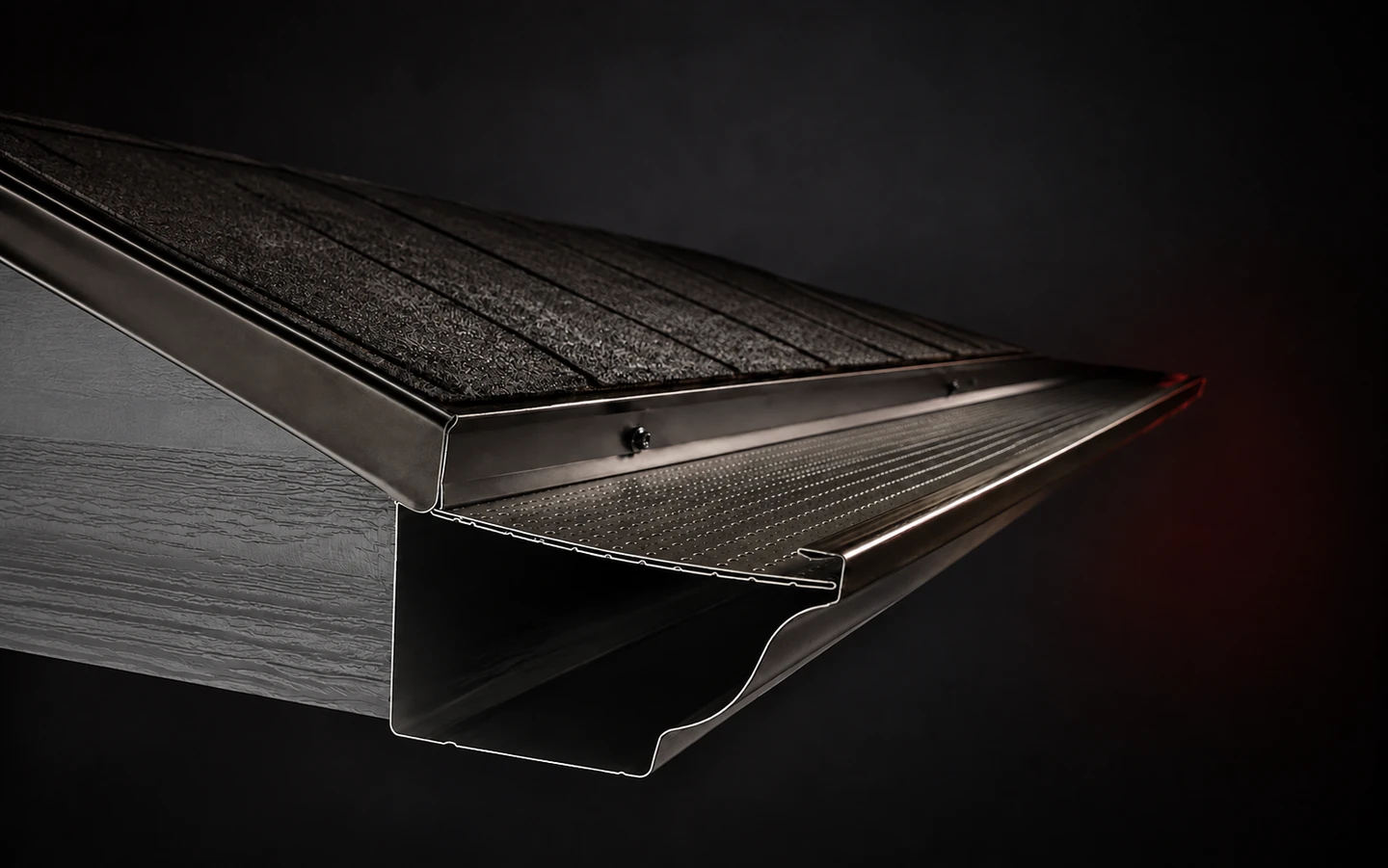
The drainage path begins where rain lands on the roof and ends where the downspout releases it. Every transition matters: roof plane to valley, valley to roof edge, edge to guard, guard to gutter, gutter to outlet, and downspout to the final discharge area.

A restriction or sizing problem at any point can appear as “the guard cannot handle rain” even when the real problem is an outlet, pitch, or downspout farther downstream.
Concentrated runoff deserves special treatment

Long roof valleys can send water to one short section of gutter. Steeper roof planes increase velocity, and an inside corner may receive runoff from more than one direction. Those locations should be identified during measurement rather than discovered during the first storm.

The installer can then evaluate profile, mesh choice, gutter capacity, and whether the outlet layout provides a workable path for that concentrated flow.

Guards do not increase undersized drainage capacity

If a gutter is too small, pitched incorrectly, sagging, or served by restricted downspouts, covering it will not correct the underlying condition. The same is true when discharge water pools beside the foundation because the lower drainage path is inadequate.

A professional estimate should identify repair or replacement needs before guard installation and explain them separately from the protection product.

Evaluate performance with realistic expectations

Florida storms vary, and wind can drive water and debris in unusual directions. The goal is a correctly sized, free-flowing system matched to normal site conditions—not a claim that one screen can override every roof design or extreme weather event.

Clean Gutter Protection uses stainless-steel mesh, an all-aluminum chassis, pre-angled profiles, and custom fitting. The final recommendation is made after the roofline and existing drainage system are inspected.

Close view of fitted gutter guard profiles above an open gutter channel

Project evidence

Field evidence: follow the handoff from roof to gutter

This Clean Gutter Protection installation close-up shows multiple guard profiles positioned at the roof edge above the gutter channel. It makes the water path visible instead of treating the mesh as an isolated product. During an estimate, that same handoff must be evaluated together with gutter pitch, outlets, downspouts, and discharge.

  • The guard profile meets the roof edge continuously and directs water toward the gutter channel.
  • The gutter remains part of a larger drainage path that continues through outlets and downspouts.

Common questions

Questions to ask before choosing a system

Can micro mesh handle heavy Florida rain?

It can be configured for Florida homes, but performance depends on roof area, pitch, valleys, gutter and outlet capacity, downspouts, mesh selection, and fitting. Those conditions should be evaluated together.

Why does water overshoot at a roof valley?

Valleys can concentrate fast-moving runoff into a short section of gutter. The roof geometry, guard profile, gutter size, and outlet layout all need to be reviewed at that point.

Will gutter guards solve water pooling near my foundation?

They may prevent debris-related clogs, but pooling can also result from downspout discharge, grading, underground drainage, or insufficient capacity. The full drainage path needs diagnosis.

Get a recommendation based on your actual roofline

We inspect the gutters, debris exposure, roof geometry, and water path before recommending an installed system.

Schedule My Free Estimate