.webp)

With 20+ years of combined experience on Northeast Florida roofs, our team has seen every gutter guard material go up against Jacksonville weather: hurricane-season wind, summer afternoon downpours that overwhelm gutters in minutes, year-round pine needles, spring live oak tassels and salt air at the beaches. Some materials hold up. Others end up in the flower beds.
Most online comparisons are written by people who have never climbed a ladder in July humidity. They miss what actually decides the outcome here: how a material handles years of UV, constant moisture, algae and storm debris, and how well it is fastened to the gutter.
Why Humid Climates Demand Better Gutter Guard Materials
Jacksonville's air stays humid most of the year, and heavy afternoon downpours are routine from late spring through early fall. Guards here rarely get a chance to dry out, so mold, mildew and algae can film over a guard sold as "maintenance-free," and constant moisture, heat and sun speed up how fast weak materials break down.
The 6 Major Gutter Guard Materials: How They Hold Up in Florida
Here is what our crews see on real roofs from Fernandina Beach to St. Augustine.
1. Fine Mesh Guards: Strong Filtering, Quality Varies
Fine mesh guards stretch a tight metal mesh over the gutter opening. Good versions are stainless steel on a rigid frame; cheap versions are thin mesh that sags or tears.
- Wind resistance: Holds through hurricane-season winds when screwed down to the gutter rather than friction-fit
- Water flow: Handles heavy rain well when the mesh is kept clear; pollen and fine grit can film over it
- Debris performance: Blocks pine needles, oak tassels and seed pods
- Weak point: Mesh without solid support underneath can sag under wet debris or dent when branches fall
2. Reverse Curve / Surface Tension Guards: Weak in Florida Downpours
Reverse curve hoods rely on water clinging to a curved lip and rolling into the gutter. In light rain that works. In a typical Jacksonville summer thunderstorm, fast-moving water can shoot right past the curve like a ski jump and land in your landscaping.
- Heavy rain performance: Prone to overshoot when rainfall is intense
- Installation sensitivity: Needs a precise angle that matches your roof pitch, which not every home allows
- Appearance: The hood sits on top of the gutter and changes the look of the roofline
- Warranty fine print: Coverage often depends on that exact installation angle
3. Brush Guards: Debris Catchers, Not Debris Blockers
Bottle brush guards look clever: bristles sit in the gutter and supposedly let water pass while holding leaves. In practice the bristles grab pine needles and oak debris and hold onto them, so you end up pulling the brushes out to clean them.
- Clogging: Fills with needles and tassels, often within a season or two under heavy tree cover
- Algae and mold: Trapped wet debris turns green and black quickly in our humidity
- Storms: Loose brushes can shift, compress or blow out
4. Foam Inserts: The Worst Match for Florida Humidity
Foam inserts and Florida humidity are a bad combination. The foam stays damp, grows mold and mildew, breaks down, and sheds debris into the gutter it was meant to protect. We do not recommend them.
- Mold and mildew: Grows readily in foam that rarely dries out
- Waterlogging: Saturated foam adds weight and slows drainage
- Mosquitoes: Damp, debris-filled foam can hold standing water
- Replacement: Expect to replace it, sooner under heavy tree coverage
5. Aluminum Guards: Rust-Proof, but Design Matters
Aluminum does not rust, which matters in Florida's humidity and near the coast. The material is a solid choice; the differences come from design. A thin, single-layer aluminum sheet with large holes lets pine needles poke through and can dent from falling limbs. A well-built aluminum guard with fine filtration and support underneath is a different product entirely.
- Corrosion: Will not rust; quality coatings and compatible fasteners help near salt air
- Hole size: Large openings let pine needles through; finer filtration is needed under pines
- Strength: Rigid, supported designs resist sagging and denting far better than flat sheets
6. Plastic and Vinyl Guards: The Budget Trap
Florida sun is hard on plastic. Plastic and vinyl guards become brittle from UV exposure, warp in summer heat, and crack when someone leans a ladder on them or cleans them. Daily expansion and contraction pulls them away from their mounting points and opens gaps for debris. The low upfront price disappears once you start replacing them.
Materials to Avoid in Humid Climates
Replacing failed systems across Northeast Florida has shown us which materials consistently underperform in our humidity:
- Plastic mesh: Turns brittle from UV and moisture cycling, then crumbles; its surface also grows algae easily
- Vinyl screens: Warps in heat and humidity and pulls loose from mounting points
- Untreated steel: Any steel without proper galvanizing or coating rusts quickly here
- Foam inserts: Hold moisture, grow mildew and break down
Matching Material to Where You Live
Not every Northeast Florida home faces the same conditions.
Coastal Areas (Jacksonville Beach, Neptune Beach, Atlantic Beach, Fernandina Beach)
- Look for: Corrosion-resistant materials such as aluminum or stainless steel, with compatible fasteners
- Why: Salt air attacks untreated steel and mixed metals; strong onshore winds test every fastener
- Avoid: Untreated steel and contact between dissimilar metals, which can cause galvanic corrosion
Older Neighborhoods with Big Live Oaks (Riverside, Avondale, San Marco)
- Look for: A low-profile guard that handles leaves, tassels and acorns
- Why: Live oaks shed heavily from late winter into spring, and the roofline appearance matters on older homes
- Avoid: Bulky reverse curve hoods that change the look of the roof edge
- Tip: If you have an HOA or are in a historic district, check its guidelines before installation
Pine-Heavy Areas (Julington Creek, Nocatee, World Golf Village, Fleming Island)
- Look for: Fine filtration that pine needles cannot slip through
- Why: Pines drop needles year-round with a heavy fall drop, and needles slide into larger holes and slots
- Tip: Even the best guard benefits from a periodic check under heavy pine cover
What Drives the Real Cost of a Gutter Guard
The cheapest guard upfront is rarely the cheapest to own. What you actually spend over time depends on:
- Material and build: Rigid, rust-proof guards last; plastic, foam and brush guards get replaced
- Linear footage and stories: More gutter and taller rooflines mean more material and labor
- Roof type and pitch: Some roofs need extra care or specific mounting
- Condition of your gutters: Sagging, leaking or undersized gutters should be fixed first
- Ongoing upkeep: Guards that clog bring back the cleaning calls and the ladder
- Storm repairs: Loose, friction-fit systems are more likely to need resetting after a storm
We explain why we don't publish prices online on our pricing page. The honest answer for your home comes from a free in-person estimate with a written quote.
Hurricane Season Reality Check
Northeast Florida has felt storms like Matthew (2016), Irma (2017), and Ian and Nicole (2022). After a major storm the pattern is consistent: guards that are securely fastened to the gutter usually need little more than debris removal, while friction-fit and loose systems are the ones that shift, lift or blow off. The material matters, but how it handles wind uplift and debris impact at the same time matters more.
For storm protection, choose a system that fastens to the gutter and does not depend on loose pieces that wind can pull out. Our hurricane season gutter prep guide covers what to check before June 1.
What Is the Best Gutter Guard Material?
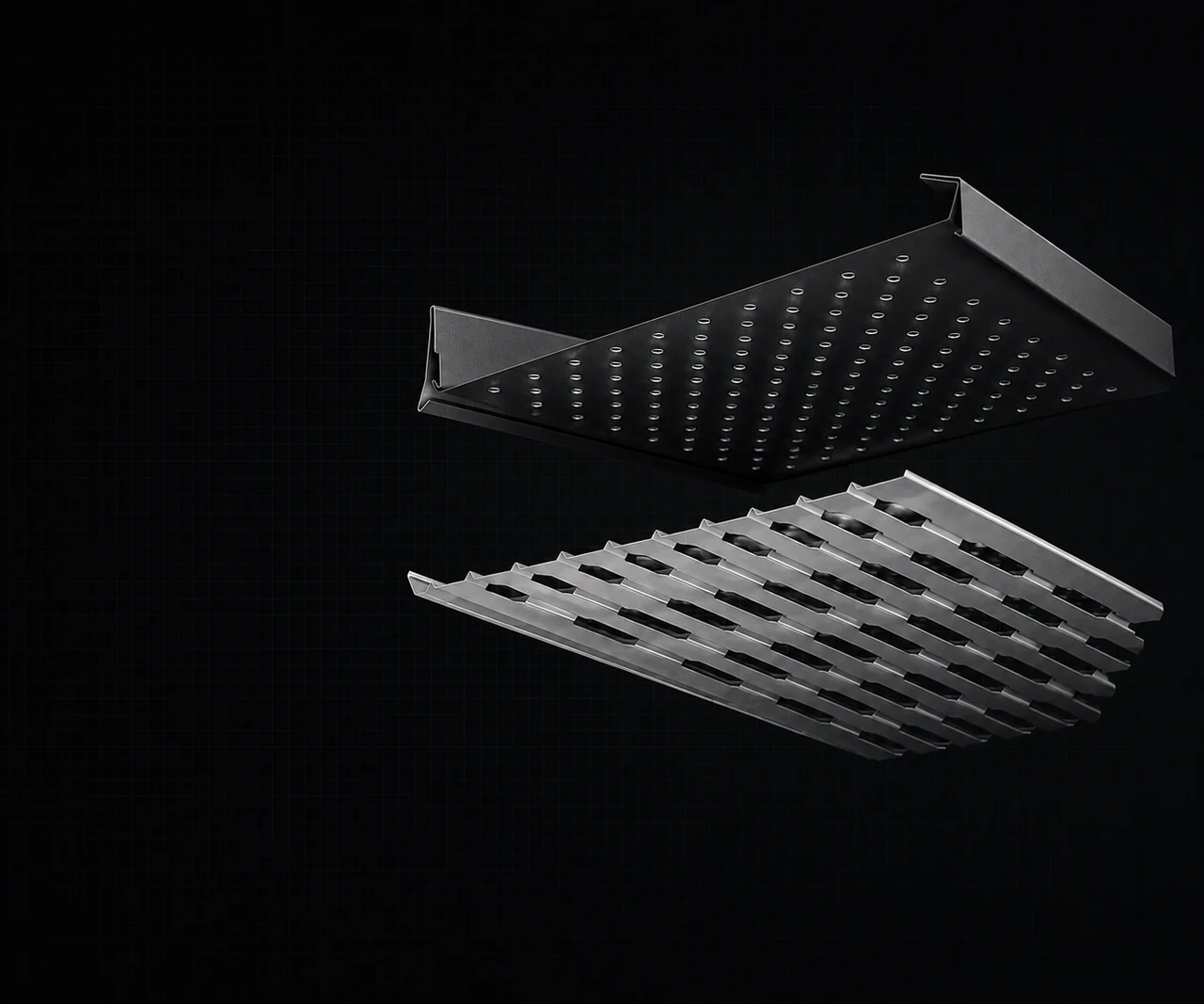
For Northeast Florida, the best gutter guard material is rust-proof aluminum built as a dual-layer system with integrated support. That is what our gutter guards are. Aluminum will not rust in our humidity or near the beach, the fine filtration layer stops pine needles and oak tassels, and the support structure keeps the guard from sagging under wet debris or caving when limbs fall. Our gutter guards install without lifting shingles. For a deeper look at how fine mesh and aluminum compare, see micro mesh vs. aluminum, or compare gutter guard types side by side.
| Material Type | Best For | Main Weakness in Florida | Our Take |
|---|---|---|---|
| Dual-layer aluminum with integrated support | Most Northeast Florida homes | Needs quality installation like any guard | Our recommendation |
| Fine mesh on weak or no frame | Light debris, sheltered roofs | Sagging and denting without support | Good filter, check the build |
| Single-layer aluminum with large holes | Leaf-only yards | Pine needles slip through | Middle of the road |
| Reverse curve | Light rainfall areas | Overshoot in heavy downpours | Poor fit for Florida storms |
| Brush guards | Short-term fix | Traps debris, grows algae | Not recommended |
| Foam inserts | Nothing in Florida | Mold, mildew, breakdown | Not recommended |
| Plastic / vinyl | Nothing in Florida | UV brittleness and heat warping | Not recommended |
What About Copper Gutter Guards?
Copper is the premium outlier. It does not rust, and copper naturally discourages moss and algae, which is a real advantage in our humidity. It also develops a patina over time and has a long service life when properly installed. The tradeoff is cost: copper runs considerably more than aluminum. It makes the most sense on historic or high-end homes, such as older houses in Riverside or Avondale that already have copper gutters and need guards to match. Keep copper away from aluminum or steel parts to avoid galvanic corrosion. Our aluminum vs. copper gutters guide covers the gutter side of that choice.
Installation Details That Decide Success or Failure
Many gutter guard failures are installation failures. Our crews regularly fix systems where corners were cut. Here is what matters:
Prep Before the Guards Go On
- Clean the gutters out completely and deal with any existing mildew
- Seal leaking joints first; a guard will not fix a leak underneath it
- Confirm the drip edge directs water into the gutter, not behind it
- Use corrosion-resistant fasteners and enough mounting points to hold in storm winds
Solid Hangers
A guard is only as strong as the gutter under it. Hangers need to be sound and closely spaced so the gutter does not sag under the weight of a heavy afternoon storm and wet debris. If yours are pulling loose, fix that first with a gutter repair.
Proper Slope
Gutters need a slight, consistent slope toward the downspouts, commonly about 1/4 inch per 10 feet. Too little and water pools (hello, mosquitoes). Too much and water rushes to one end and can overflow.
Sealed Seams and Compatible Metals
Florida heat makes gutters expand and contract every day. Seams need flexible sealant made for that movement, and fasteners should be compatible with the gutter and guard metal to avoid galvanic corrosion. Running water through the system before calling a job complete catches problems that would otherwise only show up in the next downpour.
Maintenance by Material in Humid Weather
No guard is zero-maintenance under Florida trees, but the material decides how much work you are signing up for:
- Rigid aluminum, stainless and copper: An annual look for debris on top, an occasional rinse with a garden hose to clear pollen, and a hardware check after major storms
- Coated or lighter aluminum: A cleaning or two a year to keep mildew staining down, plus extra checks during live oak tassel season
- Foam and brush inserts: Regular removal and cleaning, watching for crumbling or mildew, and periodic replacement
For a full seasonal routine, see our guide on how often gutters should be cleaned.
Frequently Asked Questions from Jacksonville Homeowners
Do gutter guards really work in Florida's heavy rains?
A well-designed, properly installed guard on correctly sized gutters handles our downpours. The key is a guard that lets water in fast, a gutter with enough capacity underneath, and downspouts that are not clogged.
How long do gutter guards last in Florida's climate?
It depends on the material. Rust-proof metal guards with solid support last for many years. Plastic, foam and brush guards break down much sooner in our sun and humidity. See our warranty page for what our coverage includes.
How often should I clean gutter guards in Florida?
At least once a year, more often under heavy pine cover. See "Maintenance by Material in Humid Weather" above for what each material needs.
Do gutter guards help with mosquitoes?
A guard that keeps debris from damming the gutter helps prevent standing water where mosquitoes breed. A guard that slows drainage or traps wet debris, like foam or brushes, can make the problem worse.
How do I know when to replace my gutter guards?
Watch for rust, sagging or warped sections, overflow during normal rain, needing cleanings more often, and mold that keeps coming back after cleaning. In our humidity, persistent growth usually means the material itself is breaking down.
Will gutter guards lower my homeowner's insurance?
Don't count on it. Florida wind mitigation discounts are tied to roof and opening features, not gutters. Ask your insurance agent about your specific policy.
Will gutter guards void my roof warranty?
Our gutter guards install without lifting shingles, which avoids one of the most common roof warranty concerns. Always check the terms of your specific roof warranty.
What about those videos showing guards failing?
Most show either a poor installation or the wrong product for the conditions: a reverse curve in a downpour, a foam insert full of mildew, or a mesh guard with no support caving under debris.
How much should I expect to pay in Jacksonville?
Cost depends on your linear footage, number of stories, roof type, gutter condition and the guard you choose. We don't quote prices online; a free in-person estimate gives you a written quote for your actual home.
Your Next Step
The right gutter guard material, properly installed, means fewer ladder climbs and less risk of water damage to your fascia, foundation and landscaping. Hurricane season runs June 1 to November 30, so the best time to get protected is before the next storm. Get My Free Estimate and we will inspect your gutters, look at the trees over your roof, and give you a written quote. Prefer to talk? Our 24/7 call center is at (888) 507-4854.