.webp)
A gutter system is more than the trough you see along the roofline. It is a set of parts that have to work together: gutters, downspouts, end caps, hangers, corners, outlets, guards and the accessories that move water away from the house. When one part is undersized, loose or clogged, the whole system backs up. Whether you are planning a new gutter installation or keeping an existing system running, here is what each part does and which ones matter most in Northeast Florida.
Core Gutter Components
Gutters
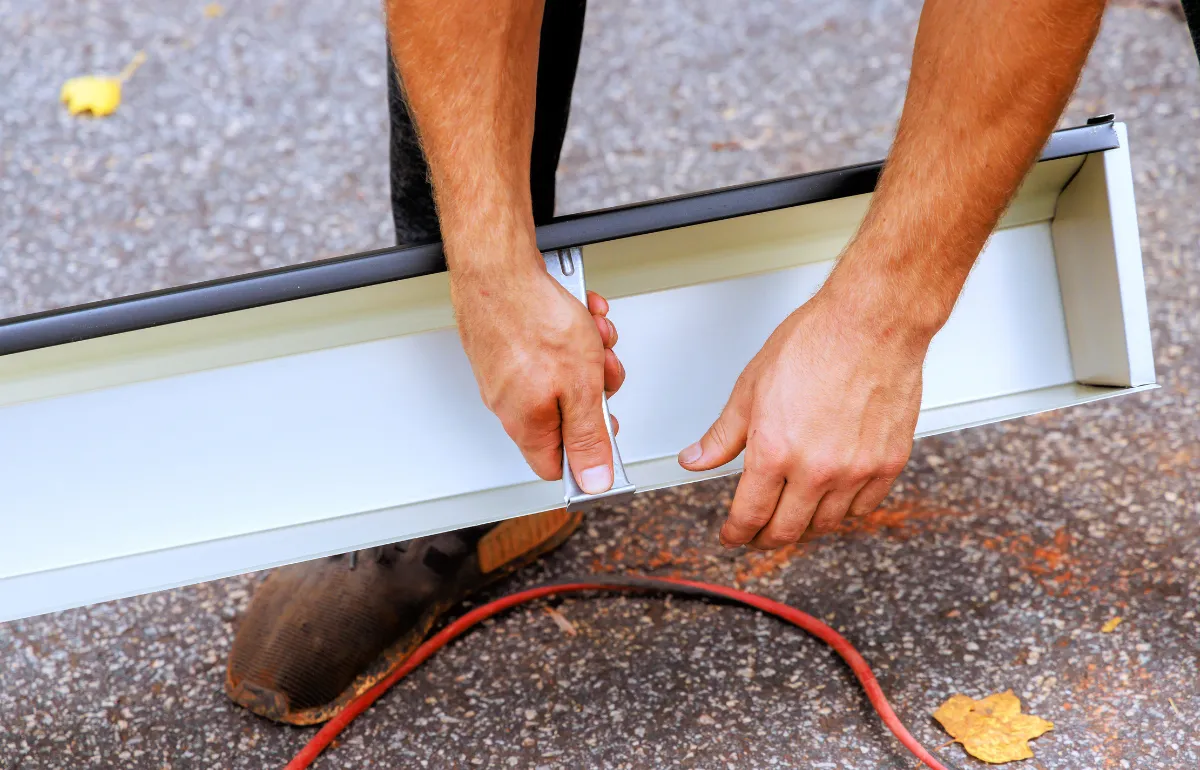
The gutter itself is the horizontal channel that catches runoff at the roof edge. Residential gutters typically come in 5-inch and 6-inch widths, with 7-inch used on larger or steeper roofs and commercial buildings. K-style is the most common profile on Florida homes; half-round shows up on historic and custom homes. Seamless gutters are formed on site to the exact length of each run, which eliminates the joints where sectional gutters tend to leak. If you are not sure which width your roof needs, our guide to choosing a gutter size walks through the factors.
Downspouts
Downspouts carry water from the gutter to the ground. They come in rectangular and round shapes, usually 2x3 or the larger 3x4 size. A gutter can only drain as fast as its downspouts allow, so the number, size and placement of downspouts matter as much as the gutter itself. Too few downspouts on a long run is a common cause of overflow. See our downspout sizing and installation guide for details.
End Caps
End caps close off the ends of each gutter run. They come in left and right versions and should match the gutter material and profile. They are sealed in place, and that sealant is one of the first things to fail on an older system, so a drip at the end of a run usually means it is time to reseal or replace the cap.
Outlets
The outlet (sometimes called a drop) is the opening cut into the bottom of the gutter where the downspout attaches. A clean, properly sized outlet lets water drop straight into the downspout instead of swirling past it. Upsizing outlets and downspouts together is one of the simplest ways to improve drainage on a large roof section.
Support Components
Hangers
Hangers hold the gutter to the fascia. Hidden hangers sit inside the gutter and screw through the back into the fascia; older systems often use exposed spikes and ferrules or straps, which loosen over time. Spacing matters: hangers spaced too far apart let a full gutter sag, which ruins the slope and causes standing water. Fastening into solid wood also matters, since a screw in rotted fascia will not hold.
Brackets and Fasteners
Brackets, screws and rivets tie the system together. In coastal areas like Fernandina Beach, Ponte Vedra and Palm Coast, salt air speeds up corrosion, so fasteners should be stainless steel or coated and compatible with the gutter metal. Mixing metals (for example, steel screws in aluminum gutters) can cause galvanic corrosion at the joint.
Connection Components
Corners and Miters
Inside and outside corners turn the gutter around the shape of the roof. On seamless systems, corners are usually the only joints left, so they are where leaks most often start. Inside corners below a roof valley also take the heaviest flow on the house, which is why they are a common overflow point.
Elbows and Downspout Connectors
Elbows connect the outlet to the downspout and turn the downspout at the bottom so water exits away from the wall. Most are A-style or B-style 45- or 75-degree bends. Every bend is a spot where debris can lodge, so a downspout with several elbows clogs more easily than a straight drop.
Protection Accessories
Gutter Guards
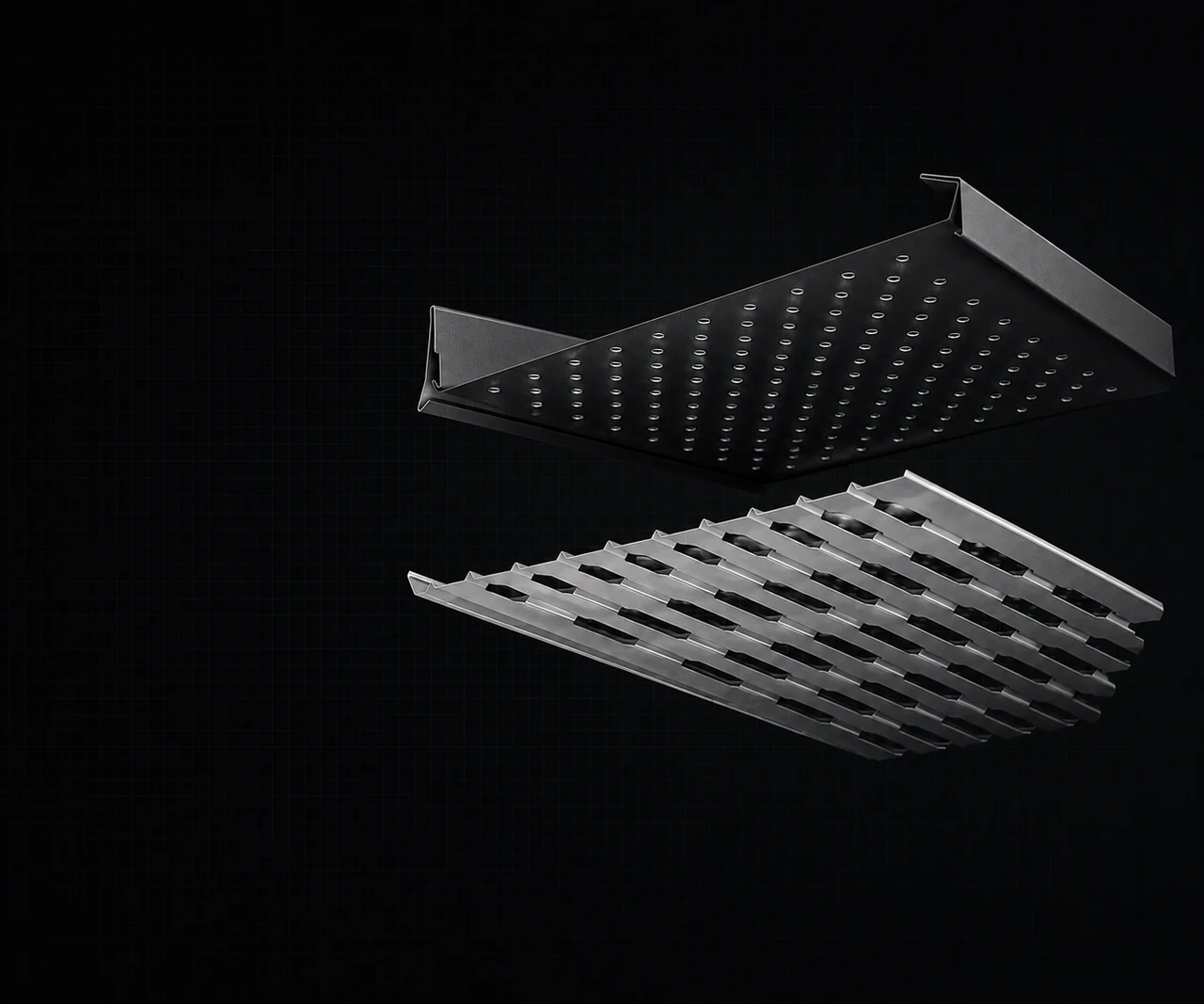
Gutter guards cover the channel so leaves and needles stay out while water gets in. They are the accessory that most affects how often the rest of the system needs attention. Guard designs vary widely in how they handle fine debris like pine needles and oak tassels; our gutter guard comparison breaks down the main categories. Our gutter guards install without lifting shingles.
Splash Guards and Overflow Diverters
Splash guards (also called overflow protectors) are short barriers installed at inside corners and below roof valleys, where fast-moving water tends to overshoot the gutter during heavy rain. They redirect that water back into the channel and help protect the fascia and the ground below from repeated soaking. If a gutter overflows along the whole run and not just at a corner, a splash guard will not fix it: check for clogs, slope and gutter size first, since a steep or large roof section can outrun a 5-inch gutter in a Florida downpour.
Drainage Accessories That Matter Most in Florida
Every gutter system needs the basics, but Northeast Florida weather puts extra demands on a few parts. A 1-inch rain on 1,000 square feet of roof sheds roughly 600 gallons of water, and summer thunderstorms drop that kind of rain in a short time, sandy soil washes out easily, and hurricane season brings wind and sustained rain from June 1 through November 30. If you are upgrading or replacing components, these are the ones worth getting right.
Downspout Extensions
Water that exits right at the foundation soaks the soil next to the slab and carves channels in sandy beds. Extensions carry it farther out. Rigid aluminum extensions are durable but can get hit by mowers; flexible corrugated extensions are easy to fit but collect debris in their ridges; roll-out extensions that unfurl in rain are tidy but have moving parts that wear out. Some homeowners have a drainage contractor connect downspouts to buried lines; if you go that route, keep the gutters clean so debris does not end up underground.
Splash Blocks
A splash block under each downspout spreads the water out and slopes it away from the house. In sandy soil, choose a block that can be staked or set firmly so a summer downpour does not wash it out of position, and make sure it drains instead of holding standing water, which breeds mosquitoes. Set it so it slopes away from the wall: too flat and water pools, too steep and it cuts an erosion channel at the end. Concrete blocks are heavy and stay put but can crack and grow algae in the humidity; plastic blocks with stakes are light and easy to anchor but break down faster in the sun, so inspect them every year.
Rain Chains
Rain chains look great and work well in light rain, but in a Florida thunderstorm much of the water spills off the chain instead of following it down. They are best kept for covered entries, courtyards and other sheltered spots, with traditional downspouts handling the main roof areas. If you install one, use a proper kit with an outlet adapter at the gutter and anchor the bottom of the chain so it does not swing in storm winds. Copper and aluminum chains hold up to salt air near the beaches without rusting.
Leaf Strainers
Leaf strainers are wire or plastic baskets that sit in the gutter outlet to keep debris out of the downspout. They are useful when a downspout feeds an underground line, but they catch debris right at the drain, so they need regular clearing during live oak season (late winter into spring) and through the heavy fall pine needle drop. Aluminum wire baskets outlast plastic ones, which turn brittle under Florida sun. Full gutter guards keep debris out of the whole channel instead.
Hangers Rated for Wind
Hurricane-season wind and a gutter full of water put real load on the hangers. Hidden hangers fastened into solid fascia and spaced closely enough for the load help prevent sagging and pull-away. Loose or widely spaced hangers are one of the mistakes covered in our article on DIY gutter installation mistakes.
Gutter Guards Matched to Local Debris
Live oak tassels, pine needles and palm debris clog gutters fast. A professionally installed gutter guard system keeps the channel open so every other part of the system can do its job.
Choosing Drainage Accessories: Simple Fixes to Bigger Upgrades
You do not need every accessory on the market. Start with the problem you can see (pooling, erosion, overflow, clogged downspouts) and work up from the simplest fix:
- Leaf strainers and splash guards: small, inexpensive parts for clog-prone downspouts and overflow-prone corners.
- Splash blocks and extensions: low-cost fixes that move water away from the foundation at every downspout.
- Rain chains: a decorative upgrade for sheltered spots, not a replacement for downspouts on the main roof.
- Buried downspout lines: the biggest investment, involving digging and a drainage contractor, for yards with persistent pooling or erosion.
Splash blocks, leaf strainers and most extensions are reasonable do-it-yourself jobs. Buried lines need a drainage contractor who can handle slope, utility lines and leak-free connections, since a poorly sloped pipe can hold water and clog. Anything on the gutter itself (adding outlets, upsizing downspouts, rehanging a sagging run) is best left to a gutter pro working from a ladder with the right fasteners.
Hurricane Season Check for Gutter Accessories
Before June, walk the house and check every splash block and extension for cracks or movement, clear debris from outlets and strainers, and tighten any loose downspout straps. Consider swapping rain chains for standard downspouts through storm season. Then run a hose into each gutter run: if water backs up or spills at a corner, it will do worse when a tropical system parks over Northeast Florida for hours. Our hurricane season gutter prep guide covers the full checklist.
Keeping the System Working
Most gutter problems come from a few causes: clogs, poor slope, loose hangers and failed seals. Gutters should drop slightly toward each outlet; our gutter slope guide explains how much. Regular gutter cleaning keeps debris from sitting in the channel, and prompt gutter repair fixes small leaks, loose sections and leaky seams before water reaches the fascia.
When the system works, it protects against foundation damage, landscape erosion, fascia rot and roof edge damage.
Common Questions
Which gutter parts wear out first?
Sealant at end caps, corners and outlets usually goes first, followed by loose hangers and dented or disconnected downspout sections. Gutter guards, splash blocks and extensions should be checked for damage after storms and replaced when they are cracked or no longer staying in place.
How often should gutter components be inspected?
Look over your gutters at least twice a year and after every major storm. Watch for sagging runs, drips at seams and corners, water spilling over the front edge, and downspouts that have come loose or are emptying against the foundation.
What gutter drainage accessories does every Florida home need?
At minimum, every downspout should end in a splash block or extension that carries water away from the foundation. Add leaf strainers where downspouts feed underground lines, splash guards at valleys and inside corners that overflow, and gutter guards if trees overhang the roof.
How often should drainage accessories be replaced?
It depends on the material and sun exposure. Plastic splash blocks and flexible extensions break down fastest under Florida UV, so inspect them yearly and replace them once they crack, sag or hold water. Concrete blocks and aluminum parts last longer as long as they stay intact and in position.
Can drainage accessories prevent foundation problems?
They are one of the simplest ways to reduce the risk. Keeping roof runoff from soaking the soil next to the slab limits erosion, settling and moisture problems around the footings, especially in the sandy soil common across Northeast Florida.
Get the Right Parts Installed Right
The right parts only help if they are sized and installed correctly for your roof. Our team will measure your roof, check your downspouts, hangers and drainage, and give you a written quote at no cost. Get My Free Estimate, or call our 24/7 call center at (888) 507-4854.