.webp)
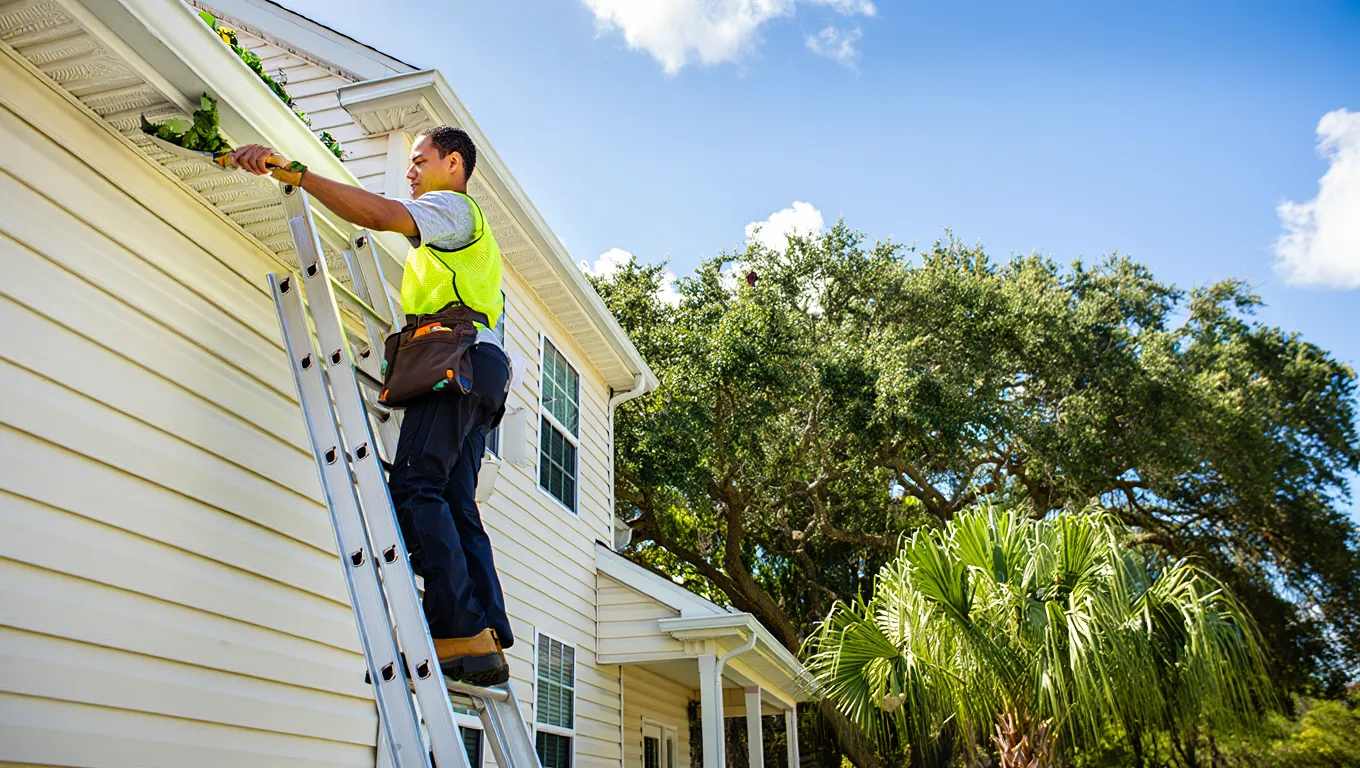
Spring is the most important gutter cleaning of the year in Northeast Florida. Up north, fall is leaf season. Here, live oaks drop their old leaves from late winter into spring, right as pine and oak pollen coat every roof from Jacksonville to St. Augustine. Clean that out in spring and your gutters go into the summer downpours and hurricane season working the way they should.
Why Spring Matters for Northeast Florida Gutters
Our spring stacks several problems on top of each other: live oak leaf drop, oak tassels, pine needles, heavy pollen and humidity that turns it all into a wet mat. That mix is what makes spring cleaning here different from basic leaf removal.
From March through May, Jacksonville area homes face these stressors:
- Live Oak Leaf Drop: Live oaks shed heavily from late winter through spring, along with the stringy tassels that pack into gutters and downspout openings
- Pollen Accumulation: Oak and pine pollen settles on the roof and washes into the gutters with every rain
- Spring Storms: Passing fronts and the first thunderstorms of the year test gutter capacity and reveal winter damage
- Humidity Effects: High moisture accelerates organic debris decomposition, creating blockages
- Wildlife Activity: Birds and squirrels begin nesting in clogged gutters
The Cost of Delaying Spring Cleaning
Skip the spring cleaning and the problems compound. Debris that sits through April and May is still sitting there when the daily summer storms start in June. Here is why regular gutter cleaning matters in the first place.
Common consequences of delayed spring cleaning include:
- Overflow during spring thunderstorms
- Pollen-clogged downspouts creating standing water
- Water pooling at the foundation, which sandy Northeast Florida soil lets wash out quickly (see how gutters prevent foundation damage)
- Mosquitoes and other pests breeding in wet, decomposing debris
- Extra weight and standing water that strain hangers and seams
Northeast Florida Spring Weather Patterns
Timing your cleaning to our weather makes the work safer and keeps it from being wasted.
March: Transition Month
March is mild and comfortable for outdoor work, and live oaks are in the middle of their leaf drop. It's a good time for a first assessment and cleaning, but expect to clear gutters again once the oaks finish shedding.
Key March Tasks:
- Remove winter debris and inspect for damage
- Clear downspouts of any blockages
- Check gutter slope and alignment
- Inspect and clean gutter guards if installed
April: Pollen Peak
By April the leaf drop is winding down, but tassels, pollen and pine needles are still collecting. Pollen on its own rarely blocks a gutter, but mixed with wet leaves it forms a dense sludge that slows water and plugs downspout openings. A cleaning after the leaves are down catches the bulk of the season's debris.
Key April Strategies:
- Weekly visual inspections for pollen accumulation
- Immediate downspout clearing after pollen drops
- Consideration of professional mid-season cleaning
- Documentation of any overflow issues during storms
May: Storm Season Prep
May is your last window before the summer pattern of afternoon thunderstorms sets in and hurricane season starts on June 1. Anything still wrong with your gutters now will show up in the first big downpour.
Key May Priorities:
- Final pre-hurricane season inspection
- Address any overflow or drainage issues
- Trim vegetation near gutters
- Prepare emergency cleaning supplies
The Northeast Florida Pollen Challenge
Anyone who has parked outside in Jacksonville in spring knows the yellow coating. That same layer lands on your roof and rinses into the gutters.
Understanding Local Pollen Patterns
Northeast Florida's pollen season runs from late winter into spring:
- Late winter: Pine pollen starts the yellow dusting
- Early to mid-spring: Oak pollen and oak tassels peak alongside the live oak leaf drop
- Late spring: Grass pollen extends the season, while pines keep dropping needles year-round
Pollen-Specific Cleaning Techniques
Standard gutter cleaning methods often fail against pollen accumulation. Effective pollen removal requires:
- Strong Rinsing: A trickle just moves wet pollen around; a hose nozzle on a firm spray setting flushes it toward the downspout
- The Right Scoop: A flexible gutter scoop gets the sludge off the gutter bottom better than a hand or trowel
- Downspout Flushing: Pollen creates paste-like clogs in downspouts that require thorough flushing
- Follow-up Inspections: Check systems 1-2 weeks after major pollen events
DIY vs Professional Spring Cleaning
DIY or professional comes down to your roof height, your tree cover and how much ladder time you're comfortable with.
When DIY Makes Sense
Single-story homes with accessible gutters and homeowners comfortable with ladder work can handle basic spring cleaning. DIY is appropriate for:
- Routine debris removal on single-story homes
- Simple pollen flushing with garden hose
- Basic visual inspections for obvious damage
- Homes with gutter guards needing light maintenance
When to Call Professionals
Call a professional for:
- Two-story homes: Ladder work at that height is where most DIY injuries happen
- Heavy tree cover: Homes under mature live oaks and pines collect more debris than a quick DIY pass will clear
- Damage or sagging: Loose hangers, leaking seams and pulled-away sections need gutter repair, not just cleaning
- Records: A pro's notes and photos document your system's condition, which helps if you ever file a storm claim
Not sure how often your home needs it? Our guide on how often gutters should be cleaned breaks it down by tree cover.
Step-by-Step Spring Cleaning Process
Here is the process we recommend, whether you do it yourself or hire it out.
Phase 1: Safety and Preparation
Safety Setup:
- Use proper ladder placement (1:4 ratio, stable ground)
- Have a spotter for all ladder work
- Wear non-slip shoes and work gloves
- Check the forecast: avoid windy or wet days, and get down at the first sign of lightning
Tool Preparation:
- Gutter scoop or small hand shovel
- Garden hose with an adjustable spray nozzle
- Bucket for debris collection
- Plumber's snake for downspout clogs
Phase 2: Debris Removal
Systematic Approach:
- Start at downspouts and work toward high points
- Remove large debris by hand
- Scoop out accumulated pollen and fine particles
- Bag all debris to prevent ground contamination
Phase 3: Washing and Inspection
Thorough Cleaning:
- Rinse gutters with a firm hose spray, working toward the downspouts
- Flush downspouts from top to bottom
- Check for proper water flow and drainage
- Inspect for damage, loose fasteners, or alignment issues
Phase 4: Final Testing
System Verification:
- Run water through entire gutter system
- Check for leaks at joints and connections
- Verify proper drainage away from foundation
- Document any issues requiring follow-up attention
Common Spring Problems and Solutions
These are the spring problems we see most often on Northeast Florida homes.
Clogged Downspouts
Problem: Oak tassels, leaves and pollen pack into thick, paste-like clogs in downspouts that resist normal flushing.
Solution: Use a plumber's snake to break up the clog, then flush from the top. Consider downspout strainers to catch future buildup.
Storm Damage Assessment
Problem: Winter storms may have loosened gutters or created subtle damage not immediately visible.
Solution: Professional inspection can identify problems like loose fasteners, separated joints, or compromised slope that will worsen during spring rains.
Wildlife Nesting
Problem: Birds and squirrels build nests in clogged gutters during spring mating season.
Solution: Remove nests carefully (check for eggs/babies first), clean thoroughly, and consider gutter guards to prevent future nesting.
Preparing for Rainy Season
Spring cleaning sets your gutters up for the summer downpours and hurricane season that follow.
Capacity Testing
Run a hose at the high end of each run and watch the water reach the downspout. A hose is far gentler than a Jacksonville summer storm, so if it pools, backs up or spills over the front, the gutter will overflow in a real downpour. Remember that a 1-inch rain on 1,000 square feet of roof sends roughly 600 gallons into your gutters.
Emergency Preparation
Spring cleaning should include preparation for emergency situations:
- Clear access paths to downspouts for emergency cleaning
- Identify and address any overflow risks near electrical equipment
- Ensure proper drainage away from foundation and air conditioning units
- Document your gutter system's condition for insurance purposes
Hurricane Season Readiness
Hurricane season runs June 1 to November 30. Hurricane preparation involves additional steps, but a spring cleaning gives you clean, sound gutters to start from.
Local Vegetation Management
The trees that shade Northeast Florida homes are the same ones filling the gutters.
Tree Trimming Strategy
Trimming back overhanging limbs cuts down how much ends up in your gutters:
- Oak Trees: Trim branches overhanging gutters to reduce leaves, tassels and acorns
- Pine Trees: Remove low-hanging branches that drop needles and cones
- Palm Trees: Trim dead fronds that can fall during storms
- Flowering Trees: Consider placement when planning new landscaping
Ground-Level Landscaping
Proper landscaping around downspouts ensures effective water drainage:
- Maintain 3-foot clearance around downspout discharge areas
- Grade soil to direct water away from foundation
- Use mulch sparingly to prevent debris accumulation
- Consider rain gardens for natural water management
Cutting Down Spring Maintenance with Gutter Guards
If you're cleaning gutters several times every spring, a gutter guard is the long-term fix. Guard types handle our debris differently:
- Micro-mesh guards: Best for pollen and fine debris protection
- Foam inserts: Good for moderate pollen areas, require periodic replacement
- Screen guards: Effective for leaves but less effective against pollen
- Reverse-curve systems: Handle large volumes but may struggle with fine particles
Our gutter guards are built for Northeast Florida debris and install without lifting shingles. See how they handle live oak leaves and tassels.
Professional Services and Scheduling
Optimal Service Timing
Gutter companies book up in spring, so plan ahead:
- Early March: Best time to schedule before busy season
- Late March-Early April: High demand during pollen peak
- Mid-May: Final opportunity before hurricane season preparation
Service Options
A good spring visit should include more than scooping debris:
- Cleaning: Debris removal from gutters, then a rinse
- Downspouts: Flushed and confirmed flowing
- Inspection: Hangers, seams, slope and fascia checked, with any repairs flagged
- Storm Follow-up: Damage assessment and repair after a major storm
What Spring Cleaning Costs
Cost depends on your home's height and roofline, total gutter length, how much debris is in the gutters and whether downspouts are clogged or repairs are needed. Homes under heavy oak and pine cover take longer than homes with open yards. We don't publish flat prices because those factors vary so much from house to house (our pricing page explains why). The fastest way to a real number is a free in-person estimate with a written quote.
Compared with repairing a rotted fascia, a washed-out flower bed or water at the foundation, a spring cleaning is the cheap part of owning gutters in Northeast Florida.
Getting Started with Spring Maintenance
Clean Gutter Protection handles gutter cleaning, repairs and gutter guards across Jacksonville, St. Augustine, Ponte Vedra, Nocatee, Fleming Island, Orange Park, Fernandina Beach and the rest of Northeast and North Central Florida. Our team brings 20+ years of combined experience to every job, from oak-heavy yards in Orange Park to salt-air homes at the beaches.
Don't let the first summer storm find clogged gutters. Get My Free Estimate or call our 24/7 call center at (888) 507-4854 to book your spring cleaning.